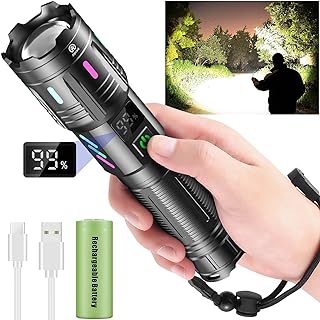
When it comes to selecting the perfect flashlamp, understanding lumens and brightness levels is crucial. As consumers, we often face a myriad of choices that can leave us overwhelmed. Flashlamps not only serve practical purposes but also enhance our experiences in various settings. Knowing how brightness is measured and what lumens signify can help you make a more informed choice that aligns with your requirements, whether for camping, emergency use, or everyday tasks.
What are Lumens?
Lumens are the unit of measurement that quantifies the amount of visible light emitted by a source. Unlike watts, which measure energy consumption, lumens focus solely on light output. This distinction is vital for consumers looking to assess the effectiveness of a flashlamp. For example, a flashlamp with a higher lumen rating will typically produce a brighter light, making it more suitable for situations that require significant illumination.
To illustrate, consider two flashlamps: one with a lumen output of 100 and another rated at 500 lumens. The latter will illuminate a larger area and penetrate darker environments more effectively. This is especially important for outdoor activities such as hiking or camping, where visibility can be a matter of safety. Understanding lumens allows you to choose a flashlamp that meets your brightness needs without overspending on unnecessary features.
Brightness Levels and Their Importance
Brightness levels in flashlamps can vary significantly based on application. Users need to consider various factors, such as the intended use, the area to be illuminated, and environmental conditions. For instance, a flashlamp used for home repairs may not require the same brightness as one intended for search and rescue missions. Therefore, assessing brightness levels helps in selecting a flashlamp that is not only efficient but also effective for specific tasks.
Moreover, brightness can be categorized into multiple levels ranging from low to high. Low brightness levels, typically below 100 lumens, are suitable for close-range tasks such as reading or providing ambient light. Medium brightness, between 100 and 500 lumens, can be used for general purposes like walking or minor repairs. High brightness, exceeding 500 lumens, is ideal for situations demanding maximum visibility, such as outdoor adventures or emergency scenarios.
People Also Look For:
- REHKITTZ Torch LED Torches Super Bright,3300 Lumens Adjustable Focus Flashlight for Dog Walking Hiking Emergency
- Bike Lights Front and Back, Super Bright 6 LED Bike Light, 5000mah Lithium Battery Bicycle Lights, 5 Lighting Modes Mountain Road ...
- Ainiv Bike Lights Ultra Slim, Bike Lights Front and Back Set Rechargeable, 3 Lighting Modes, USB Charging, IP45 Waterproof Cycle L...
- WholeFire 360° Rotatable COB LED Torch, 2 Colour Lights (Red & White) 3 Modes Work Light Rechargeable Portable Handheld LED Torch...
- Sofirn SC28 Led Torch 2800 Lumens Super Bright Type C Rechargeable Torches Powerful Tactical EDC Flashlight with 3 User-Selectable...
Real World Examples of Lumens in Flashlamps
When selecting a flashlamp, real world scenarios can provide valuable context for understanding lumens and brightness levels. For instance, imagine a night hike where visibility is crucial. A flashlamp rated at 300 lumens would sufficiently light the path ahead, allowing you to navigate safely over uneven terrain. In contrast, a lower lumen output might not provide enough illumination, resulting in potential hazards.
Another example involves home use. If you are using a flashlamp during a power outage, a device rated at 500 lumens can effectively light up a large room, making it easier to move around and perform necessary tasks. On the other hand, a 100 lumen model may only be effective in small areas, leaving you in the dark in larger spaces.
Choosing the Right Flashlamp Based on Usage
When choosing a flashlamp, it is essential to align the lumen rating with your specific usage requirements. Here are some considerations to keep in mind:
- Type of Activity: Determine what activities you will use the flashlamp for. Are you camping, hiking, or using it for home repairs?
- Range of Light: Assess how far you need the light to reach. Longer distances require higher lumens to ensure visibility.
- Battery Life: A powerful flashlamp may consume more energy, affecting its battery life. Balance brightness with battery duration.
- Portability: If you need a flashlamp for travel, consider weight and size alongside lumens.
For example, if you plan to use your flashlamp primarily for home emergencies, a model with a lumen rating of 400 to 600 may be most effective. However, if you are an avid camper requiring a flashlight for navigating trails, you might opt for a more powerful option exceeding 800 lumens.
Ultimately, the decision will depend on personal preferences and specific needs. An informed choice will not only enhance your experience but also ensure that you are well-equipped for various situations.
Understanding Additional Features that Affect Brightness
Beyond lumens, several additional features can affect the perceived brightness and overall functionality of a flashlamp. One significant factor is beam distance. A flashlamp may have a high lumen output but if the beam does not project far enough, it may not be as useful in certain contexts. For instance, a searchlight designed for emergencies may require a focused beam that reaches further distances, making lumen counts somewhat secondary to beam focus.
Additionally, the type of bulb used in the flashlamp can influence brightness. LED bulbs are known for their efficiency and brightness, often providing higher lumens per watt compared to traditional incandescent bulbs. This means you can achieve greater illumination without sacrificing battery life, which is particularly beneficial in outdoor scenarios.
Another aspect to consider is the flashlamp's runtime. A model that produces high brightness for a short duration may not be as useful as one that provides moderate brightness over extended periods. Evaluating the runtime in conjunction with lumens can provide a more comprehensive understanding of how the flashlamp will perform in real world conditions.